Fernando Albán:
A State Crime
An examination of Fernando Albán’s death in Venezuelan state custody, the contradictory official accounts, and the institutions that allowed impunity to endure.
 By Ernesto Marcano RequenaPolitical Analyst•Published September 29, 2026Updated September 29, 2026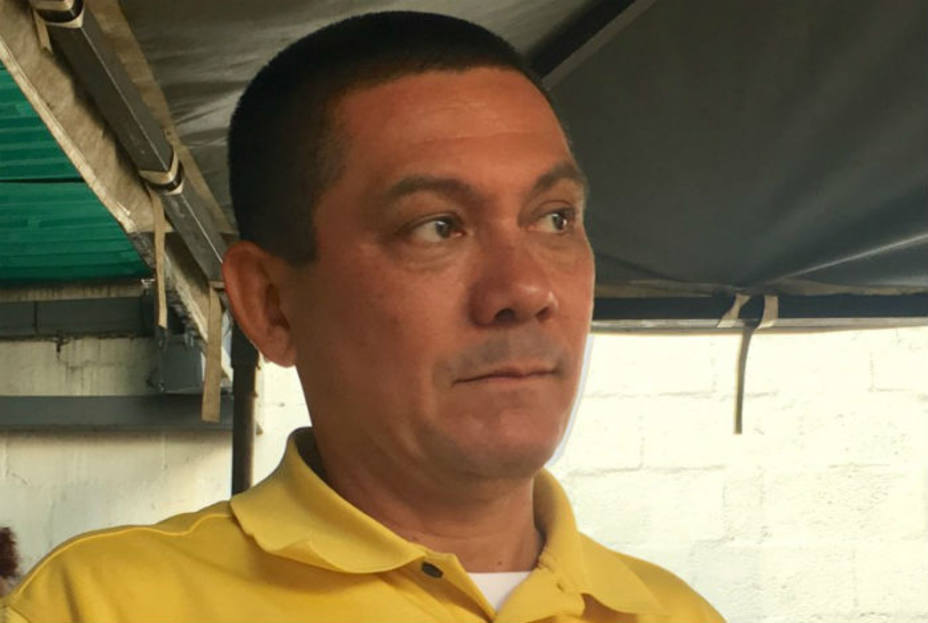
He fell barefoot. Of all the details surrounding Fernando Albán’s death on October 8, 2018, that is the one the country’s memory has been unable to release. Not the tilt window that barely opens, nor the two official versions—improbably contradicting each other on the same afternoon—nor the absence of a single video in a building full of cameras. His feet. A Caracas city councilman who three days earlier had stepped off a plane wearing a suit and carrying a suitcase, and who had asked his lawyer for a clean shirt so he could appear before a judge, ended up lying shoeless on the pavement in Plaza Venezuela, like someone who had already been stripped of everything else.
Removing a detainee’s shoes is not a practical gesture; it is the first act of a ceremony. It tells a man that he is no longer a citizen but has become a body. What follows that stripping away, in the place where the State has decided to stop being the State, always happens without witnesses.
What happened afterward did have witnesses: the entire country. Before nightfall, Interior Minister Néstor Reverol wrote on Twitter that Albán, while being taken to court, “asked to use the bathroom and, while inside, threw himself into the void” from the tenth floor. At nearly the same time, Attorney General Tarek William Saab said that he had thrown himself from a waiting room. Two officials from the same government describing the same suicide in two different places. That contradiction is the seam in the disguise: a real event has only one location; a story invented in haste has as many as there are people assigned to tell it. And the word suicide was spoken before the autopsy, before anyone examined the window. The attorney general announced the investigation in the same act in which he announced its conclusion.
The story required three things, and none withstood scrutiny. A place without agents, even though a detainee accused of attacking the president would not go alone to the bathroom inside State intelligence headquarters. A moment, even though tilt windows require time and effort, not a single impulse. And silence, because in a building with cameras in every corridor, the absence of images can be explained only if those images told a different story. The family reported marks incompatible with a fall, and the State denied an independent autopsy. The interpretation maintained by the defense and human rights organizations is spoken quietly in Caracas: an interrogation went too far, and someone decided that a body falling outside the building told a story that could fit inside a tweet. The suicide was not the tragedy. It was the alibi.
That composure has precedents. In 1977, South Africa’s justice minister said the death of Steve Biko—interrogated naked until he suffered a brain injury—left him cold; it took twenty years for the police officers to confess. In Chile, courts rejected nearly every habeas corpus petition during the dictatorship while detainees died in places judges refused to inspect; the Supreme Court took forty years to apologize. At Nuremberg, judges were tried as well, and prosecutor Telford Taylor summarized it in one image: the murderer’s dagger hidden beneath the jurist’s robe.
The Albán case cannot be understood without considering the roof above it. In a republic, the Supreme Court is where power ends and protection begins, the final office a citizen can reach when the minister lies, the prosecutor remains silent, and the police beat. Its authority comes not from force but from dignity and honesty. When that roof surrenders, every room below is left exposed. Venezuela’s Supreme Court had surrendered before Albán was detained: it was a court handpicked one night in December 2015 by a parliament that had already lost the election. That court declared the elected National Assembly in contempt and, in August 2018, named the political leaders who were to be prosecuted. Albán was a trusted associate of one of them. The justices did not climb to the tenth floor. They had signed the door. And when a citizen died in State custody, they did not order a single investigative measure.
Every State crime has two forms of authorship. The material one belongs to those who were in the room, those who removed the shoes. The State acknowledged a minimal part of that responsibility: in August 2021, the same Attorney General Saab admitted that Albán had been killed, and two low-ranking agents received sentences of just under six years for offenses that were not called torture. The State admitted the homicide in the same act in which it declared itself a victim of it. Then there is the intellectual authorship, the one that does not appear in the case file: the minister who announces without seeing, the prosecutor who repeats without investigating, the justices who opened the door and refused to look. The United Nations Fact-Finding Mission concluded that judges and prosecutors were components of the machinery of repression, not its observers. That is what is abominable: not the blow in the cell, but the signature in the office.
At the funeral, his son spoke a single sentence before the cardinal and thousands of people: “My father did not kill himself; my father was murdered.” After taking away his shoes, his life, and his trial, the State took away his death as well and gave him one that, for a man of faith, was also a sin.
The defenselessness that made this possible remains in place and continues to spread. The mass detentions following the July 2024 elections were not an anomaly but a perfected method. As long as the roof remains surrendered, every citizen lives beneath the same window.
That is why the appointment of the justices who will govern the Supreme Court concerns the very pillar of democracy. A country cannot be repaired by an election if, the next day, the same judges sign the same doors. The appointment process must be the opposite of 2015: deliberate, based on credentials, and conducted in the light. The legitimate Assembly has understood that this is where the key lies, and if that effort succeeds, 2027 may become a year filled with justice in its most demanding sense: courts that request the video, order the autopsy, and refuse to accept two versions of the same death.
Then what Cardinal Baltazar Porras said from the altar will be fulfilled: it will not go unpunished. This is not a slogan; it is how history works. The truth never arrived through the initiative of the courts that denied it. It arrived because someone refused to stop naming the dead. What will remain of the case is the image of a man who asked for a clean shirt to defend himself before the law and whom the law returned barefoot. That is the portrait of a State that ceased to be one.
And the only way for it to become one again is to recognize that the crime was not committed by two agents on a tenth floor, but by all those who, from above, made that tenth floor possible.